.svg)

Case Study / Analytical Research
Authenticity, Luxury Beauty, and Gen Z on Instagram
Independent final-year research based on 9 semi-structured interviews and a participant-led Instagram scroll-back task, examining how London-based Gen Z beauty consumers negotiate authenticity in sponsored luxury beauty content.
Independent researcher
Luxury beauty communication, influencer marketing, and Gen Z beauty audiences in London
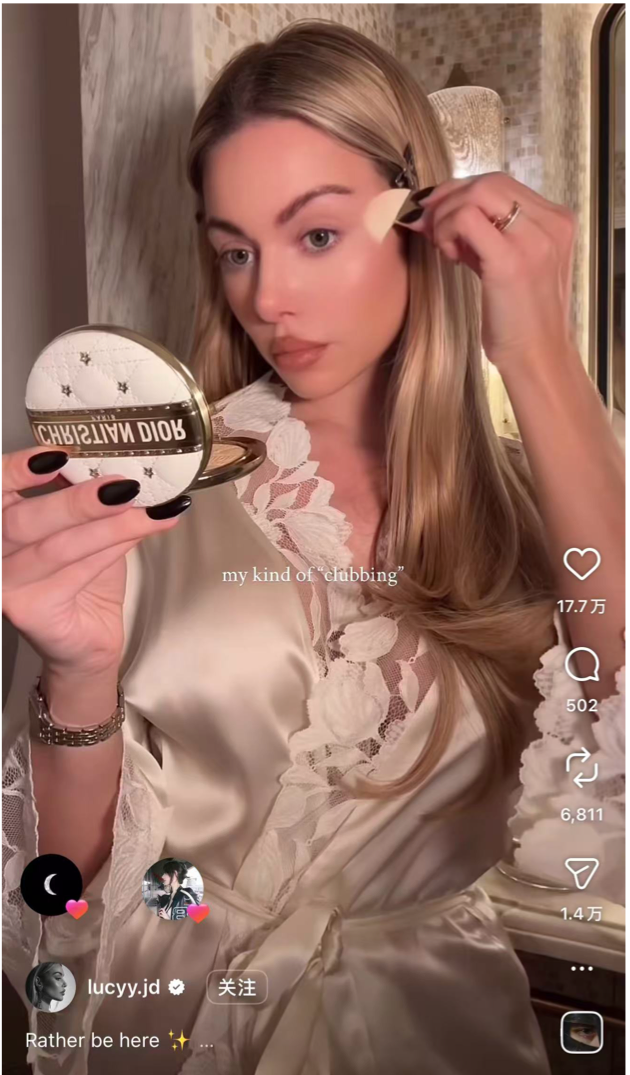
Research Project Final
This project examined how authenticity is negotiated where aspirational beauty imagery, commercial persuasion, and moral judgement meet. Instead of treating authenticity as a fixed quality, it reframed the topic as an audience interpretation problem with direct implications for luxury beauty communication.
ObjectiveTo understand how London-based Gen Z beauty consumers interpret sponsored luxury beauty posts on Instagram and translate those insights into more credible brand communication.
Research Basis9 semi-structured interviews, participant-selected Instagram stimuli, and reflexive thematic analysis.
Process
From research design to strategic insight.
The project moved from literature and question design into qualitative fieldwork, then into a framework and clear brand-facing implications. This structure keeps the research academically grounded while making its strategic value easy to scan.
Defined the research question and built a literature review around authenticity, luxury beauty, Gen Z, and Instagram platform behaviour.
Conducted 9 semi-structured interviews with a participant-led scroll-back task to ground discussion in real Instagram encounters.
Synthesised the data into a triadic framework and practical implications for luxury beauty communication.
Method Evidence
Sample and stimulus design.
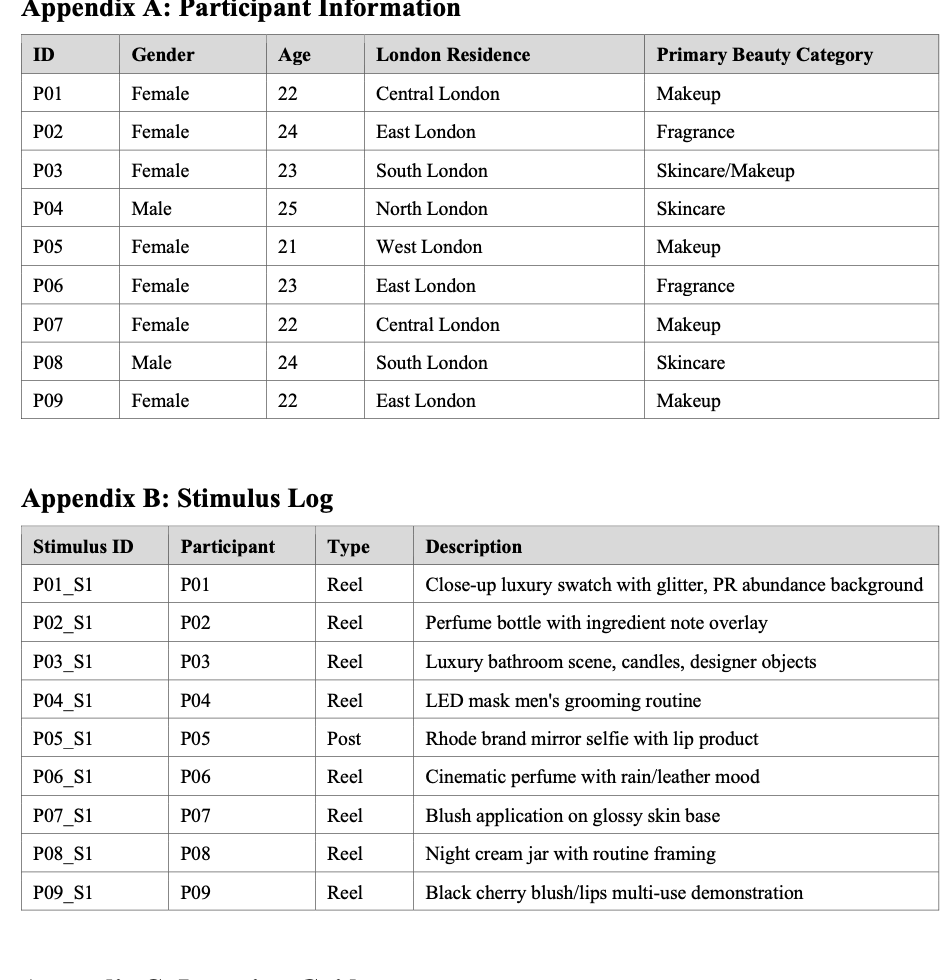
This supporting artefact shows how the project was grounded in a defined participant sample and participant-selected Instagram stimuli, helping connect the research question to concrete beauty content rather than abstract opinions alone.
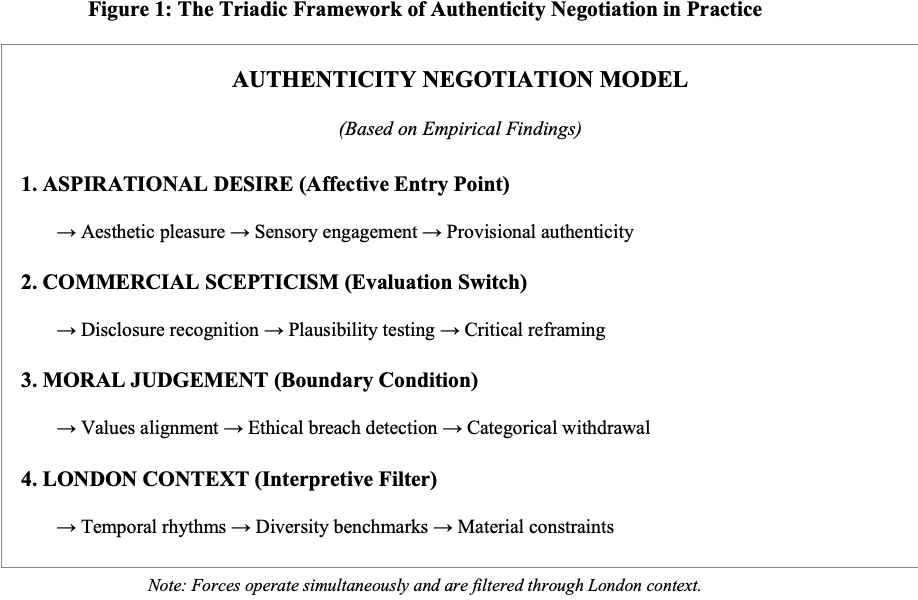
Participants balanced aspiration, scepticism, and moral judgement at the same time, rather than making a simple real-versus-fake judgement. London also worked as a lived filter for what felt believable, relevant, and ethically coherent.
Strategic Response / Outcome
Strategic Response and Learning.
The value of the project was not only explaining audience perception, but translating qualitative insight into a clearer communication strategy for beauty brands working with Gen Z audiences.
This project strengthened my ability to turn qualitative audience research into strategic recommendations for beauty and luxury brand communication.
Keep aspiration, but avoid over-staging. Polished content works best when routines, settings, and endorsement cues still feel plausible.
Build credibility through transparency, proportionate sponsorship, and peer-like proof rather than overly managed influencer theatre.
Treat ethics, inclusivity, and London-specific relevance as central communication signals, not secondary brand values.
Designing a Gen Z Beauty Launch Strategy for Flower Knows
A social-first communication plan designed to build awareness and engagement for Flower Knows among Gen Z and Millennial beauty audiences.
Open previousReimagining Kiehl's Through Circular Beauty Strategy
A future-facing proposal exploring how Kiehl's could strengthen sustainable beauty leadership through circular thinking, transparency, and participatory brand experience.
Open next